Learn/GuideRoads & road safety
Road safety for children: the way to school and back
Small children cannot judge the speed and distance of vehicles. Holding an adult’s hand, stopping and looking both ways before crossing, zebra crossings or footbridges, and no playing on the road.
Desher Kaj team13 October 20262 readers
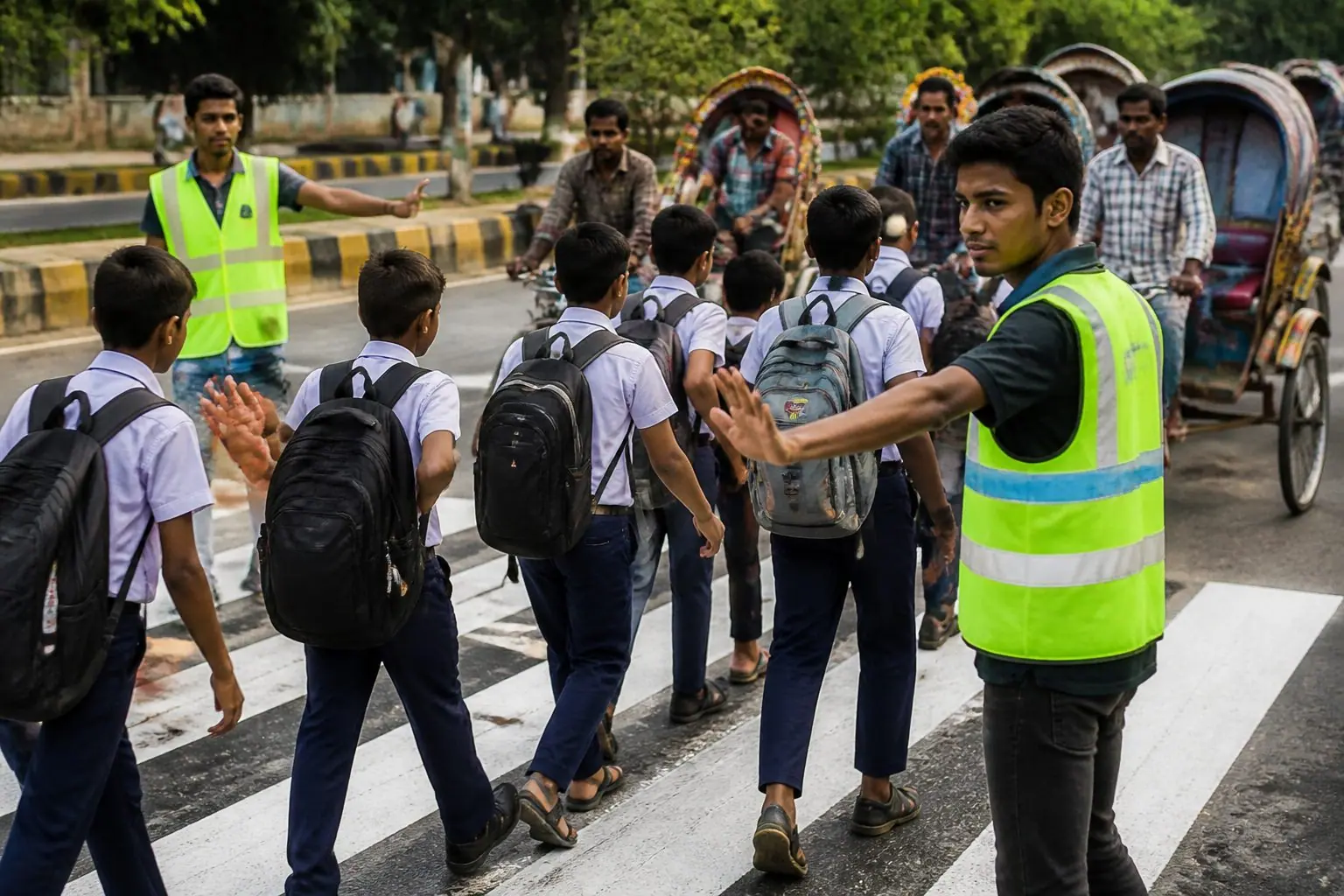
What to know Small children cannot judge the speed and distance of vehicles the way adults do, and because they are small, drivers often cannot see them. At play, they suddenly dash into the road.
Walking - A small child always holds an adult's hand on the road, with the adult on the traffic side. - Use the footpath where there is one. Where there is none, walk at the very edge of the road, so that you can see the vehicles coming towards you. - No playing on the road, beside it, or on railway lines. - No headphones and no eyes on the phone while walking.
Crossing the road - Cross at a zebra crossing, a footbridge or where the traffic police show you. - Stop at the edge. Look carefully both ways, listen, then look again. - When the road is completely clear, walk straight across, do not run. Keep looking both ways as you cross. - Never step out suddenly in front of or behind a parked bus or car; you cannot see what is coming past it.
In a car, a rickshaw, on a motorbike - Do not seat a child in the front of a car; seat them in the back, with a seat belt if there is one. - No hands or heads out of a moving vehicle. - A child on a motorbike wears a helmet their own size. - Children get on and off a school van or bus only once it has fully stopped, on the footpath side.
In the dark and the monsoon At dusk or dawn, dress the child in light or bright colours, and put reflective stickers on their bag. In the monsoon, open holes or manholes can hide under water; keep to known paths.
Show children the rules by keeping them yourself rather than just telling them; children learn from watching adults. After an accident, 999.
Comments 0
Nobody has commented yet. Be the first.
Sign in to comment